What is natural gas
What is LNG

Typical composition

Benefits

Value chain
Naturag gas supply secured
Natural gas supply being developed
Natural gas is a fossil fuel energy source. Natural gas contains many different compounds. The largest component of natural gas is methane, a compound with one carbon atom and four hydrogen atoms (CH4). Natural gas also contains smaller amounts of natural gas liquids (NGLs, which are also hydrocarbon gas liquids), and nonhydrocarbon gases, such as carbon dioxide and water vapor. We use natural gas as a fuel and to make materials and chemicals.
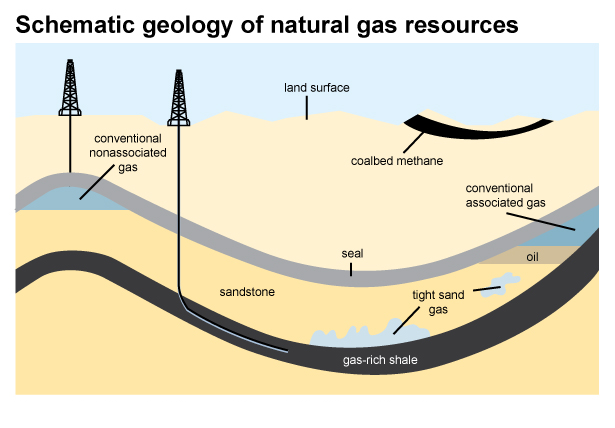
In some places, natural gas moved into large cracks and spaces between layers of overlying rock. The natural gas found in these types of formations is sometimes called conventional natural gas. In other places, natural gas occurs in the tiny pores (spaces) within some formations of shale, sandstone, and other types of sedimentary rock. This natural gas is referred to as shale gas or tight gas, and it is sometimes called unconventional natural gas. Natural gas also occurs with deposits of crude oil, and this natural gas is called associated natural gas. Natural gas deposits are found on land, and some are offshore and deep under the ocean floor. Natural gas found in coal deposits is called coalbed methane.
Natural gas withdrawn from natural gas or crude oil wells is called wet natural gas because, along with methane, it usually contains NGLs—ethane, propane, butanes, and pentanes—and water vapor. Wellhead natural gas may also contain nonhydrocarbons such as sulfur, helium, nitrogen, hydrogen sulfide, and carbon dioxide, most of which must be removed from natural gas before it is sold to consumers.
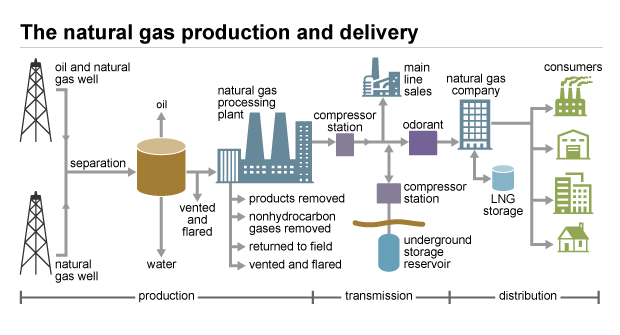
From the wellhead, natural gas is sent to processing plants where water vapor and nonhydrocarbon compounds are removed and NGLs are separated from the wet gas and sold separately. Some ethane is often left in the processed natural gas. The separated NGLs are called natural gas plant liquids (NGPLs), and the processed natural gas is called dry, consumer-grade, or pipeline-quality natural gas. Some wellhead natural gas is sufficiently dry and satisfies pipeline transportation standards without processing. Chemicals called odorants are added to natural gas so that leaks in natural gas pipelines can be detected. Dry natural gas is sent through pipelines to underground storage fields or to distribution companies and then to consumers.
Liquefied natural gas (LNG) is natural gas that has been cooled to a liquid state (liquefied), to about -162° Celcius, for shipping and storage. The volume of natural gas in a liquid state is about 600 times smaller than its volume in a gaseous state (in natural gas pipelines). The liquefaction process, developed in the 19th century, makes it possible to transport natural gas to places natural gas pipelines do not reach and to use natural gas as a transportation fuel.
Where natural gas pipelines are not feasible or do not exist, liquefying natural gas is a way to move natural gas from producing regions to markets, such as to and from the United States and other countries. Asian countries have accounted for the largest share of global LNG imports relative to all other regions since world LNG trade began in the 1970s.
LNG export facilities receive natural gas by pipeline and liquefy the gas for transport on special ocean-going LNG ships, or tankers. Most LNG is transported by tankers called LNG carriers in large, onboard, super-cooled (cryogenic) tanks. LNG is also transported in smaller International Organization for Standardization (ISO)-compliant containers that can be placed on ships and on trucks.
At import terminals, LNG is offloaded from ships and is stored in cryogenic storage tanks before it is returned to its gaseous state, or regasified. After regasification, the natural gas is transported by natural gas pipelines to natural gas-fired power plants, industrial facilities, and residential and commercial customers.
We have 2 sources of natural gas with the following compositions:
| Compound | Symbol | Source 1 % Mol | Source 2 % Mol |
|---|---|---|---|
| Nitrogen | N2 | 0.0226 | 1.8182 |
| Carbon Dioxide | CO2 | 0.0046 | |
| Methane | CH4 | 92.0077 | 94.3007 |
| Ethane | C2H6 | 5.3028 | 2.2325 |
| Propane | C3H8 | 1.9344 | 0.8926 |
| n-Butane | C4H10 | 0.3301 | 0.2654 |
| i-Butane | C4H10 | 0.3512 | 0.2166 |
| n-Pentane | C5H12 | 0.0634 | |
| i-Pentane | C5H12 | 0.0825 | |
| n-Hexane | C6H14 | 0.0293 | |
| n-Heptane | C7H16 | 0.0527 | |
| n-Octane | C8H18 | 0.0298 | |
| n-Nonane | C9H20 | 0.0055 | |
| n-Decane | C10H22 | 0.0061 | |
With the following values:
| Description | Unit | Source 1 | Source 2 |
|---|---|---|---|
| Mol Wt | lg/kmol | 17.6363 | 17.2183 |
| Calorific value - Volume | MJ/m3 | 37.0174 | 35.1192 |
| Calorific value - Mass | MJ/kg | 49.5056 | 48.2272 |
| Standard Density | kg/m3 | 0.7477 | 0.7298 |
| Wobbe Index | MJ/m3 | 52.4837 | 50.5667 |
We're pioneering a revolutionary approach to natural gas, crafting a sustainable and innovative energy future for the African continent. Our vision goes beyond traditional energy paradigms, focusing on transformative solutions that empower communities and drive economic progress through strategic natural gas development.
We're pioneering a revolutionary approach to natural gas, crafting a sustainable and innovative energy future for the African continent. Our vision goes beyond traditional energy paradigms, focusing on transformative solutions that empower communities and drive economic progress through strategic natural gas development.
The 865 km ROMPCO pipeline connects Mozambique's Pande and Temane gas fields to South African markets. Currently supplying a significant share of the region's gas demand, this pipeline offers a reliable, established route for natural gas transportation between the two countries.
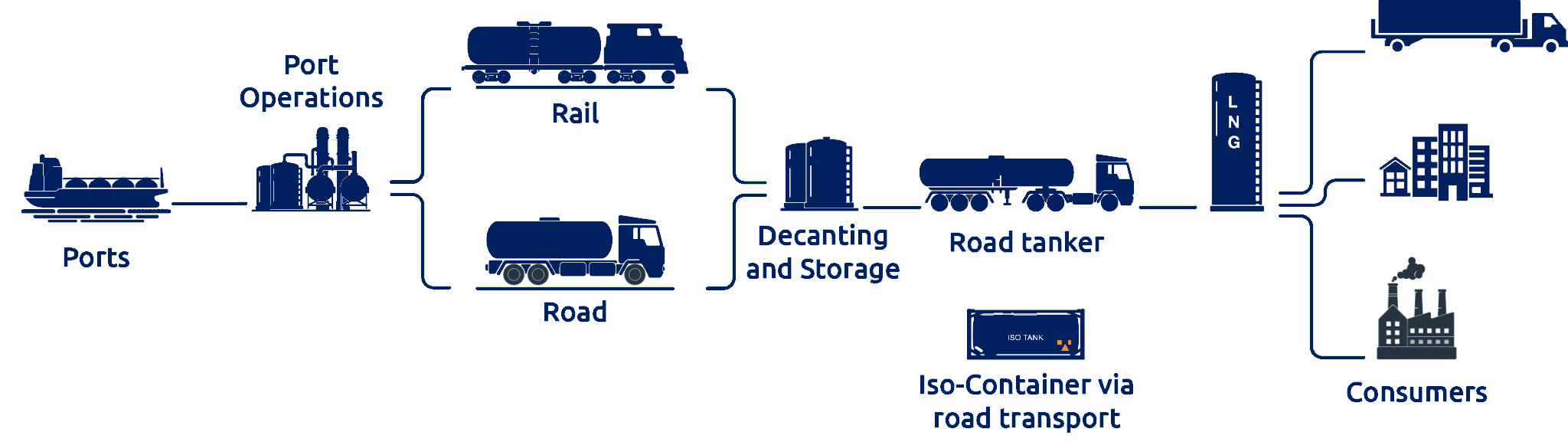
A virtual pipeline transports LNG using specialised vehicles like trucks or containers, delivering gas to areas without traditional pipeline infrastructure. This innovative solution provides flexibility, allowing gas to be transported to remote or hard-to-reach locations, with the ability to regasify the LNG at the point of use.